Last Updated on May 5, 2026 by David
Discover the Underlying Causes of the Blyth Hallway Floor’s Dull and Patchy Look Despite Cleaning Attempts
Assessing the Initial State of the Hallway Floor
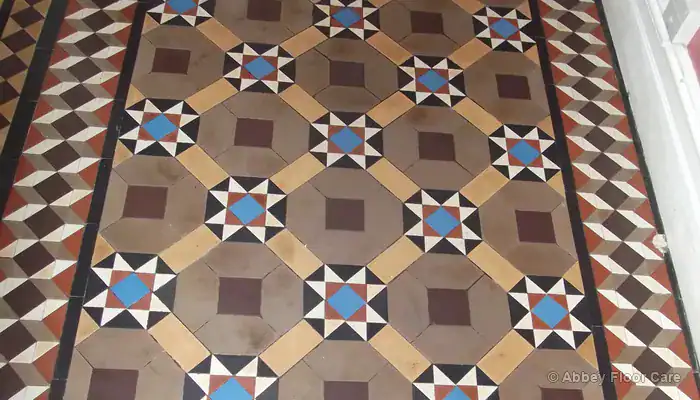
The Blyth hallway floor displayed a fatigued and worn aspect primarily because previous cleaning attempts did not address the residue entrenched within the clay body. This issue transcended mere surface dirt; it involved layers of old wax, softened coatings, and accumulated grime that settled into the tile itself, dulling the vibrant colours along the primary walkway. Recognising this distinction is crucial, particularly since Victorian and Edwardian hallway floors in UK period homes typically rest upon older permeable sub-floors. In these instances, water, residues, and maintenance products behave significantly differently compared to modern sealed installations.
The original floor displayed a Victorian clay geometric tile layout, often referred to as Minton-style due to its intricate patterns and designs. The array of red, buff, and darker tiles held a wealth of character; however, their natural beauty became obscured by layers of residue that reflected light unevenly. The patchiness was most pronounced in areas of high foot traffic, where grit, damp soil, and cleaning residues accumulated over many years, further contributing to the overall dull appearance.
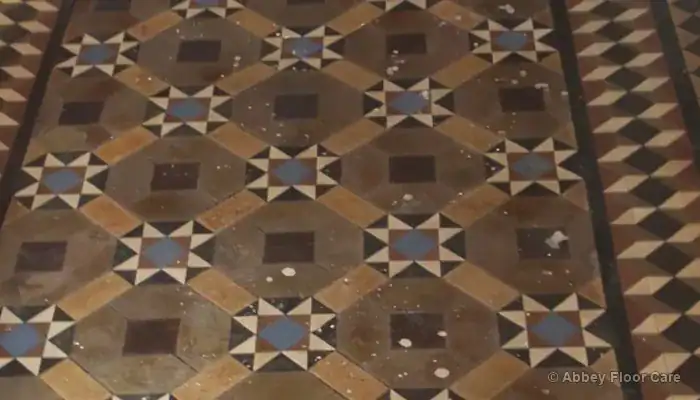
The preliminary images revealed paint splashes, dull patches, and inconsistent colours instead of distinct, identifiable stains. This complexity necessitated a different approach to cleaning. While a targeted treatment can be effective for a single stain, widespread residue requires a comprehensive cleaning strategy that considers the tile face, old coatings, the bedding layer, and the floor’s response to moisture. Similar patterns can be observed in the Victorian clay tile cleaning project in Windsor, where the absorption properties of the clay and the buildup of residues dictated the cleaning method. By comparing such projects, we can differentiate between genuine floor behaviour and unrelated search noise.
Identify the Core Issues Impacting the Hallway Floor
The primary issue identified was the residue embedded in a porous, historic clay surface. The tile body had absorbed soil and softened maintenance products, while the surface bore the burden of old sealers and wax accumulations that ordinary mopping merely smeared around. The common outcome is a floor that appears dirty immediately after cleaning because the contamination resides within the working surface, not just on top of it, which can be frustrating for homeowners.
The porosity of the tiles explains why the hallway retained grime so stubbornly. The unglazed clay allows cleaning products, soil, and rinse water to seep into fine pores, especially following repeated wet cleaning without effective extraction. This explains why stronger supermarket cleaners seldom resolve the issue; often, they exacerbate the problem instead of providing a solution.
The historic tile’s fire skin also influenced the cleaning strategy. The delicate surface layer, vulnerable edges, and clay inlays all required protection from abrasive actions. Using aggressive pads or powders risks scratching the surface, accelerating wear, and damaging intricate patterns. For a floor like this, a conservation-led cleaning approach is essential for removing residue without compromising the integrity of the original fired material.
To effectively restore the floor, old residue must be lifted rather than scrubbed deeper into the historic clay.
Wax buildup significantly contributed to the dull film. While these coatings soften under an appropriate remover, this represents only half the task. Controlled scrubbing, careful water management, and effective extraction are crucial to ensure the residue is genuinely removed rather than merely redistributed. This uneven removal creates the patchy appearance often observed on the floor.
Acrylic sealer residue was also a contributing factor. Such sealers, along with waxes, frequently leave behind contaminated surface layers that do not respond well to casual cleaning. The essential point is straightforward: a surface coating that has become contaminated must be stripped away before any accurate assessment of the floor can be made. Simply applying more sealer on top will only trap the existing problem, leading to further complications down the line.
Gain Insight into the Technical Aspects of the Cleaning Process
The level of vitrification in Victorian tiles played a crucial role in determining the cleaning specification. The type of clay, its porosity, surface condition, and overall strength all influence whether a chemical or mechanical approach is suitable. Some tiles resist moisture; others readily absorb it, necessitating stringent control throughout the cleaning process to avoid potential damage.
The presence of encaustic clay inlays made abrasion control particularly vital. These inlays create durable geometric patterns within the tile, yet they are susceptible to damage. Excessive abrasion can compromise or entirely remove the historic surface. This is why this Blyth project adhered strictly to a controlled cleaning process, deliberately avoiding aggressive restoration techniques that could jeopardise the floor’s integrity.
To mitigate abrasive wear, we limited pressure and opted for the least aggressive method effective for removing the coating. Treating these floors like modern ceramics can lead to irreversible alterations. Once the surface is flattened or the pattern dulled, restoration becomes impossible, leaving the floor permanently compromised.
Moisture control presented another critical constraint. Excess moisture drives water into the tiles and subfloor, heightening the risk of lifting, salt movement, and prolonged drying times. This concern is particularly significant in the absence of a damp-proof membrane, which can exacerbate issues. Similar moisture behaviours are discussed in the high-gloss sealer risk guide for Victorian hallway tiles, which becomes pertinent when cleaning decisions begin to intersect with sealing choices.
Salt efflorescence was also monitored during the cleaning process. Damp conditions can draw dissolved minerals to the surface, resulting in white or cloudy deposits as moisture evaporates. Homeowners often observe this recurring pale residue, which can be frustrating. The remedy lies not in aggressive cleaning but in moisture-aware treatment, controlled rinsing, and breathable protection once the floor is fully dried.
Set Clear Cleaning Goals for the Hallway Restoration
The primary objective was to create a cleaner, more uniform hallway while acknowledging that wear and age cannot simply be washed away. Victorian floors inherently exhibit their history, and the aim is to remove contamination while honouring that character. The target finish was to achieve a consistent matte appearance, with clearer pattern definition that allows the original beauty of the tiles to shine through.
The approach was shaped by low-moisture gel cleaning principles. Excessive liquid can push contaminants deeper into the tile structure, so the focus was on controlled dwell time and effective extraction rather than saturation. While rinsing remained necessary, unnecessary soaking was actively avoided to ensure that the tiles maintained their integrity.
This methodology simplifies ongoing maintenance. Employing pH-neutral cleaning products, removing grit prior to mopping, and resealing at appropriate intervals all contribute to slowing re-soiling. Conversely, steam cleaning tends to excessively wet porous clay, potentially triggering salt movement or structural issues, which can complicate future cleaning efforts. The broader Victorian and Minton tile cleaning hub provides further context for homeowners contemplating their next steps.
Investigating the Causes of Persistent Marks, Paint Spots, and Patchy Finishes Despite Cleaning Efforts
If your Victorian tiles exhibit paint spots, cloudy patches, or uneven colours after mopping, it indicates that the cleaning process fails to reach the residues that have become locked in. On this Blyth floor, layers of paint marks, waxes, old sealers, and ingrained dirt formed a stubborn layer that required softening, controlled agitation, and extraction. Merely adding more water only succeeded in shifting the problem around without providing a lasting solution.
The observed patchiness arose from different residues reacting variably across the floor. Paint and adhesive contaminants behave distinctly compared to wax or acrylic coatings, each necessitating a tailored approach. A thorough reset clean must first eliminate the old coating to accurately assess the true tile colour and restore the floor to its original glory.
The inherent porosity of the tiles exacerbated the issue. Once contaminants and rinse water infiltrate the clay, they can resurface as the floor dries, complicating the cleaning process. This is why controlled cleaning was essential, distinguishing it from a mere cosmetic fix or restoration claim that could lead to ongoing problems.
Discover How Controlled Cleaning Successfully Removed Build-Up While Preserving the Original Tile Surface
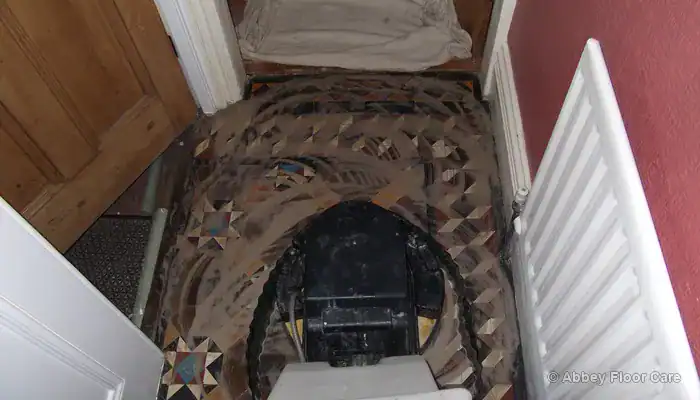
Aggressive scrubbing typically leads to surface damage before effectively addressing the underlying issue. In this case, a controlled alkaline cleaning solution was employed to soften waxes, acrylic residues, and ingrained grime without resorting to harsh abrasives that could harm the tiles. Edges and tighter spaces were meticulously finished by hand, as mechanical pressure can easily inflict damage on delicate surfaces.
The resultant slurry was extracted using wet vacuum technology. This step is crucial; without it, the loosened contaminants would merely dry back into the pores of the tiles, negating any cleaning efforts. A similar method is documented in the soiled Victorian tile floor cleaning case study in Farnham, where extraction was pivotal in achieving a stable and effective result that showcased the tiles’ true beauty.
Evaluate the Transformations After Residue Removal and Restoration of Surface Evenness
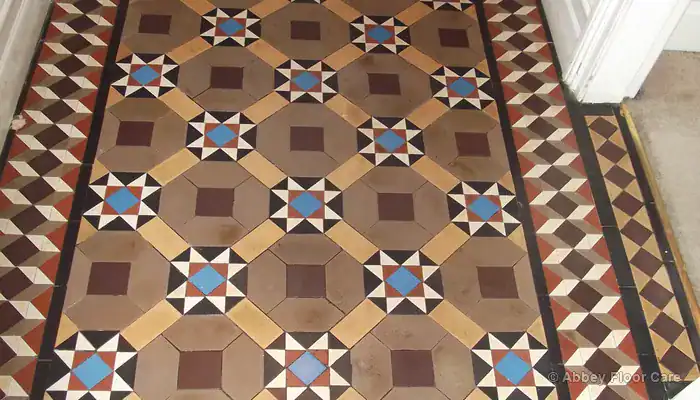
Post-cleaning, the floor revealed a more even appearance as the dull surface layer had been effectively removed without disturbing the underlying material. The definition of the patterns improved significantly, and the finish became more consistent, restoring clarity along the main traffic route. The floor now showcased its historical integrity rather than an artificial newness, allowing it to retain its character.
Before the cleaning process, the encaustic tiles and clay inlays were obscured by cloudy residues and patchy coatings. After the cleaning, the original pattern re-emerged with a cleaner, more natural finish as the contamination was not just masked but thoroughly lifted away, revealing the artistry of the tiles.
A breathable sealer was applied as a final step once the floor had completely dried. The goal was to ensure protection without trapping moisture, which could lead to future problems. Similar outcomes can be observed in the Victorian tiles hallway cleaning project in Darlington, where the sequence of cleaning and protection adhered to the same practical approach to ensure longevity and maintain aesthetic appeal.
Essential Actions to Take if Your Victorian Tiles Still Look Dirty After Cleaning
It is crucial to contextualise issues like this within the broader material framework before determining the next steps. Some floors may require nothing more than residue removal and appropriate protection, while others might involve loose tiles, missing sections, cement contamination, or salt activity that extend beyond the scope of simple cleaning. The Victorian tiles cleaning and care hub outlines these considerations without deviating from the evidence presented here, helping homeowners make informed decisions.
Tile porosity remains the initial practical query. If the floor continues to appear dull after multiple cleaning attempts, the problem typically resides beneath the surface. Adding more water seldom proves beneficial; in fact, it may exacerbate the issue. The Victorian clay tile floor cleaning project in Tutbury illustrates a similar pattern, where embedded residue ultimately determined the outcome. Proper maintenance is crucial to protect the results by limiting grit and avoiding excessive moisture that can lead to deterioration.

David Allen — Abbey Floor Care
David Allen has dedicated over 30 years to cleaning and restoring Victorian and encaustic clay tile floors throughout the UK, via Abbey Floor Care. This Blyth, Northumberland case study illustrates how paint marks, old residues, and patchy coatings were effectively rectified using controlled cleaning methods and moisture-aware protection that ensures the longevity of the tiles.
The Article Victorian Clay Tiles Cleaning And Sealing Project In Blyth Northumberland first found on https://www.abbeyfloorcare.co.uk
The Article Clay Tiles Cleaning and Sealing Project in Blyth, Northumberland appeared first on https://fabritec.org
The Article Cleaning and Sealing Clay Tiles in Blyth, Northumberland Was Found On https://limitsofstrategy.com
References:
https://limitsofstrategy.com/cleaning-and-sealing-clay-tiles-in-blyth-northumberland/