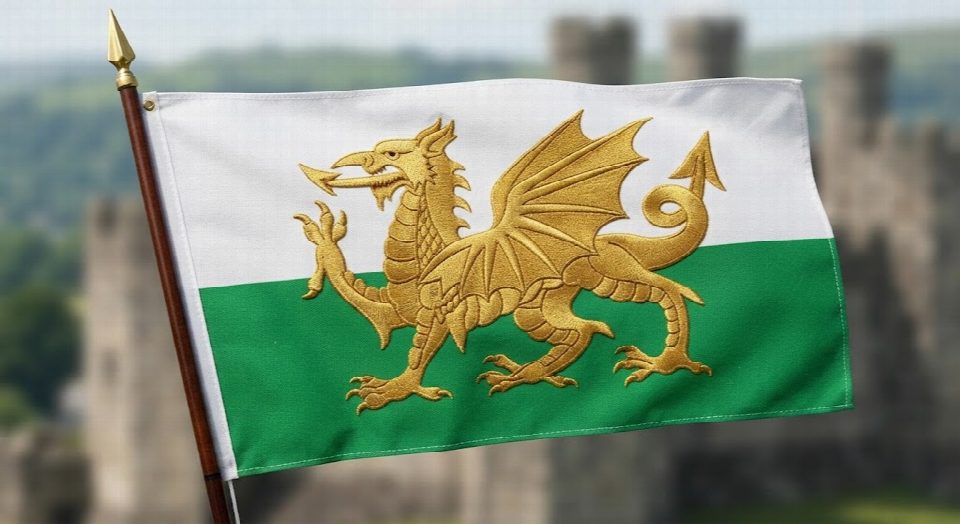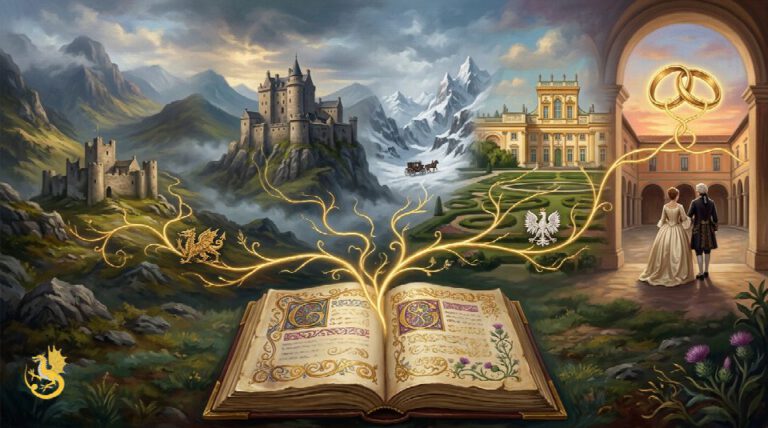
Explore the intricate royal lineage from the Welsh Princes through the Scottish Stuarts to the Polish House of Sobieski, uncovering familial ties and our shared European heritage within the House of Rhodri.
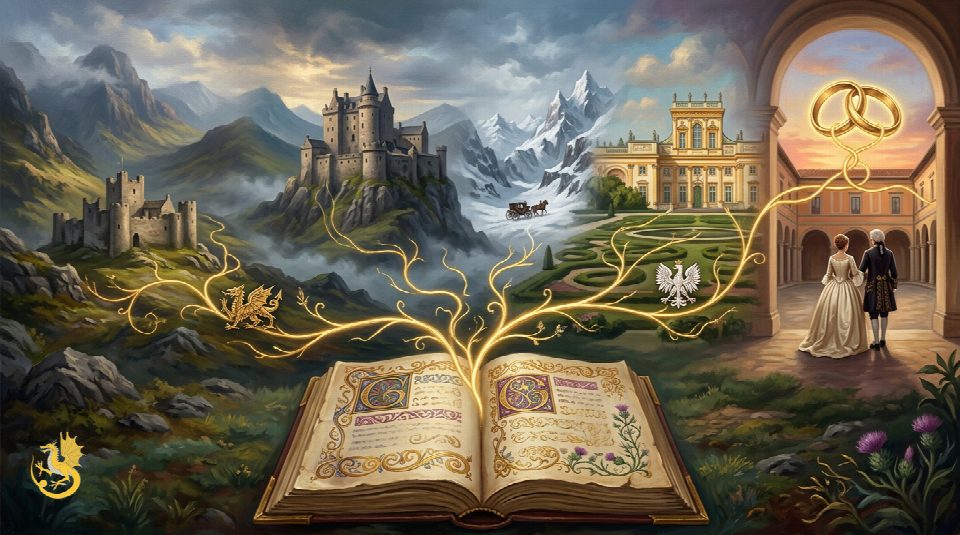
Uncovering the Royal Lineage: Welsh Princes, Scottish Stuarts, and Polish Nobility
Poland has a crucial role in our family history.
My sister married a Polish gentleman, and another Polish connection exists on my wife’s side. Now, my son and his Polish partner are expecting a child, further weaving our Welsh–Polish ties.
When I embarked on the journey to explore our Polish connections within the House of Rhodri’s history, it was a purposeful endeavour.
Poland holds a cherished place at our family gatherings, prompting me to wonder if a deeper narrative awaited discovery.
Indeed, a rich story unfolded.
This saga intertwines Welsh princes, the Tudors of Penmynydd, Scotland’s regal lineage, an exiled claimant, a Polish princess, and a marriage that faced opposition from the British government.
What started as a simple family research task quickly transformed into a compelling historical investigation.
One moment, you are sifting through papers; the next, you find yourself tracing a princess escaping captivity in the Austrian Tyrol.
Family history has no regard for the notion of “a small project”.
Exploring Our Family Story: Connections Over Claims
Before anyone measures the living room for a Polish crown, let us clarify our purpose.
This is a narrative of connections.
Our family research serves as the groundwork, tracing back to the Welsh princely families. Genealogies From this foundation, we navigate through a historical timeline defined by marriages and lineages, ultimately linking to the Tudor and Stuart dynasties and reaching the Polish House of Sobieski.
The objective is not to claim descent from every individual along this lineage. Rather, we seek to understand how these families interlinked, the circumstances that united them, and the significance of these relationships.
A particularly significant Polish marriage took place in 1719 when James Francis Edward Stuart married Maria Clementina Sobieska, granddaughter of King Jan III Sobieski of Poland. Historian Edward Corp characterises this union as a strategically arranged dynastic alliance that benefited both families. Documented
To comprehend how a narrative beginning with Rhodri Mawr culminates in that wedding, we must first return to Wales.
Welsh Heritage: Rhodri Mawr and the Princes of Deheubarth
The lineage traces back to Rhodri Mawr, progressing through his son Cadell, associated with the family line of Deheubarth.
Cadell was the father of Hywel Dda, continuing through Hywel’s son Owain, then Einion, Cadell, and Tewdwr, culminating with Rhys ap Tewdwr, king of Deheubarth. These connections are documented in the Dictionary of Welsh Biography. Genealogies
For those who prefer a systematic outline of medieval Welsh names, the lineage is as follows:
Rhodri Mawr → Cadell ap Rhodri → Hywel Dda → Owain ap Hywel → Einion ab Owain → Cadell ab Einion → Tewdwr ap Cadell → Rhys ap Tewdwr. Genealogies
Rhys ap Tewdwr’s son Gruffydd ap Rhys married Gwenllian ferch Gruffudd, the daughter of Gruffudd ap Cynan of Gwynedd. Their son, Rhys ap Gruffydd, earned the title the Lord Rhys. Genealogies
Gruffydd and Gwenllian are the ancestral couple already identified in our family research. Genealogies Their lineage thus provides a vital starting point for this expansive historical journey.
From their son, the Lord Rhys, we follow a daughter whose marriage leads us into the next chapter.
The Next Gwenllian and the Path to the Tudors
The Lord Rhys had a daughter named Gwenllian ferch Rhys, who married Ednyfed Fychan, a significant seneschal, or chief steward, serving Llywelyn the Great of Gwynedd. Genealogies
This Gwenllian is distinct from her grandmother, Gwenllian ferch Gruffudd.
Welsh family histories are rich with remarkable individuals, yet sometimes lack variety in names.
Ednyfed’s role was pivotal. His political and military contributions yielded substantial rewards in land and privileges. His descendants emerged as a wealthy and influential family, owning extensive lands across North and South Wales. Documented
Their son Goronwy ab Ednyfed also served as seneschal, this time to Llywelyn ap Gruffudd. From Goronwy descended the Tudors of Penmynydd. Genealogies
The familial trajectory continues:
Gwenllian ferch Rhys and Ednyfed Fychan → Goronwy ab Ednyfed → Tudur Hen → Goronwy ap Tudur → Tudur ap Goronwy → Maredudd ap Tudur → Owen Tudor. Genealogies
The Dictionary of Welsh Biography traces these generations and identifies Maredudd as Owen Tudor’s father and the great-grandfather of Henry VII. Owen’s son, Edmund Tudor, was the father of Henry VII. Genealogies
This narrative now links the Welsh princely families to the Tudor monarchy.
Next, we turn our focus to Scotland.
Margaret Tudor: The Link Between Welsh and Scottish Royalty
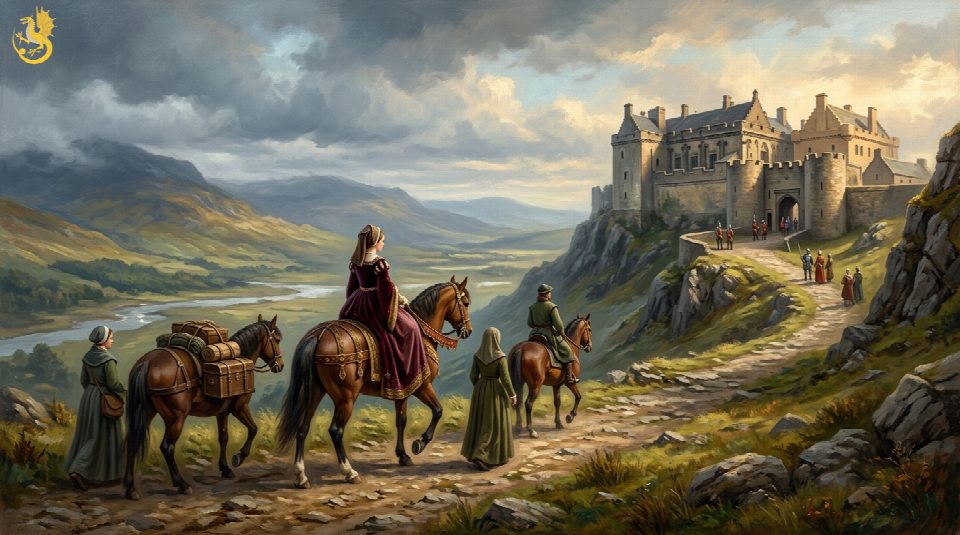
Henry VII’s daughter, Margaret Tudor, married James IV of Scotland in 1503. Their surviving son became James V. Documented
This marriage serves as the next link in our narrative: the descendants of the Welsh family enter the Scottish royal line through a Tudor princess.
Margaret’s arrival was a royal spectacle. Historic Environment Scotland outlines how James IV transformed Stirling Castle into a residence befitting a European monarch, partly to impress his new queen. Documented
Some prepare for a marriage by redecorating the guest room.
James had a castle.
From James V, the lineage continues through his daughter, Mary, Queen of Scots, and her son, James VI of Scotland, who also became James I of England. This line then proceeds through James’ son Charles I, followed by James II and VII, and ultimately James Francis Edward Stuart. Documented
This Scottish chapter resonates personally for me. I suspect my wife has Scottish roots, although that is a path we have yet to explore in depth.
Even without a direct Stuart connection, family history often provides another reason to ask questions.
The Tale of a Stuart Prince in Exile
As we discover James Francis Edward Stuart, the landscape has dramatically changed.
His father, James II of England and VII of Scotland, lost his thrones during the revolution of 1688–89. The younger James grew up in exile, becoming a focal point for supporters aiming to restore his family’s legacy. These supporters were known as Jacobites. Documented
To them, he was the legitimate James III of England and Ireland and James VIII of Scotland. To his opponents, he was merely a pretender.
For clarity, we will refer to him as James Francis Edward Stuart, avoiding the need to engage in an eighteenth-century constitutional debate.
Restoration attempts were unsuccessful. By 1717, James resided in Urbino, in the Papal States of Italy. The Jacobite rising of 1715 had weakened his position, necessitating the securing of his dynasty’s future. Documented
This meant finding a suitable wife and, he hoped, fathering children.
It also required aligning with a family willing to take significant political risks.
The Sobieski House Joins the Narrative
Maria Clementina Sobieska was the granddaughter of Jan III Sobieski, the Polish king celebrated for his victory at Vienna in 1683. Her father was Prince Jakub Sobieski. Documented
The Sobieskis enjoyed royal status, but Jakub had not inherited his father’s throne.
In Poland, the crown was elective. After Jan III’s death, Jakub was unable to secure election in 1696 and ultimately remained in Oława, Silesia, outside Poland. Documented
This situation presented a striking parallel.
Both the Stuarts and the Sobieskis had lost the kingdoms they sought. The Sobieskis had failed to retain the crown their family once held.
Both families possessed royal heritage, yet both lacked the political outcomes they desired.
A marriage between them offered new possibilities.
Jakub hoped that James would reclaim the British throne, allowing his daughter to become a crowned queen. Such a union could potentially enhance the Sobieski family’s standing. James sought a well-connected princess and heirs to secure the Stuart lineage. Documented
This was no ordinary wedding; it was an alliance forged out of immediate concerns: influence, succession, wealth, religion, and the uncertain quest for power.
Evaluating Each Family’s Contributions to the Union
Maria Clementina brought valuable connections to several prominent European dynasties, including the Habsburgs, the Bavarian Wittelsbachs, and the Spanish Bourbons. Documented
The marriage treaty, signed at Oława on 22 July 1718, included substantial financial provisions, including 600,000 livres in French investments, valuable jewellery, and other promised assets. Not all pledges were ultimately fulfilled. Documented
It appears the royal marriage ledger did not quite match the eventual reality.
Both bride and groom shared Catholic faith, and the papacy proved to be a crucial source of support. shared religion did not simplify the political landscape. Maria Clementina’s own imperial relative, Charles VI, would intervene against the marriage under pressure from George I. Documented
Royal kinship could both open doors and lead to their closure.
The Marriage Britain Sought to Prevent
George I’s administration recognised the threat posed by the prospect of a lasting Stuart dynasty.
A claimant who married and produced heirs could become a rallying point for opposition long after his immediate prospects had diminished.
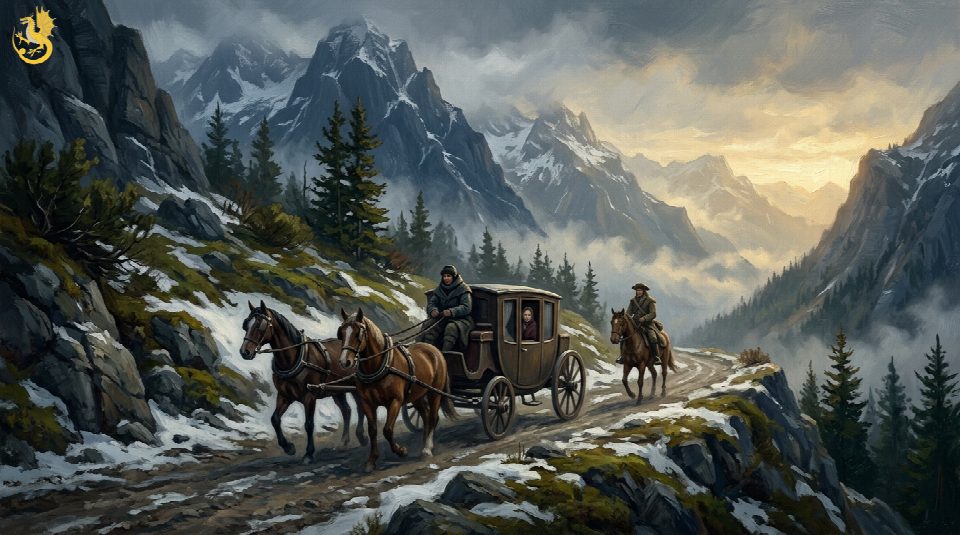
Research into the Stuart Papers reveals George’s efforts to persuade Emperor Charles VI to obstruct the marriage. In 1718, Maria Clementina and her mother were intercepted at Innsbruck while en route to Italy and placed under house arrest. Documented
From this point, the narrative shifts from family trees to an exhilarating adventure.
An Irish Jacobite officer, Charles Wogan, helped facilitate Maria Clementina’s escape. In April 1719, a small group of Irish officers assisted her in leaving captivity and continuing her journey to Italy. Documented
A Welsh dynastic branch had guided us through Scotland, leading to a Polish princess being rescued by Irish supporters on her way to an Italian wedding.
At this juncture, labelling the story as “international” feels somewhat inadequate.
The Wedding in Exile
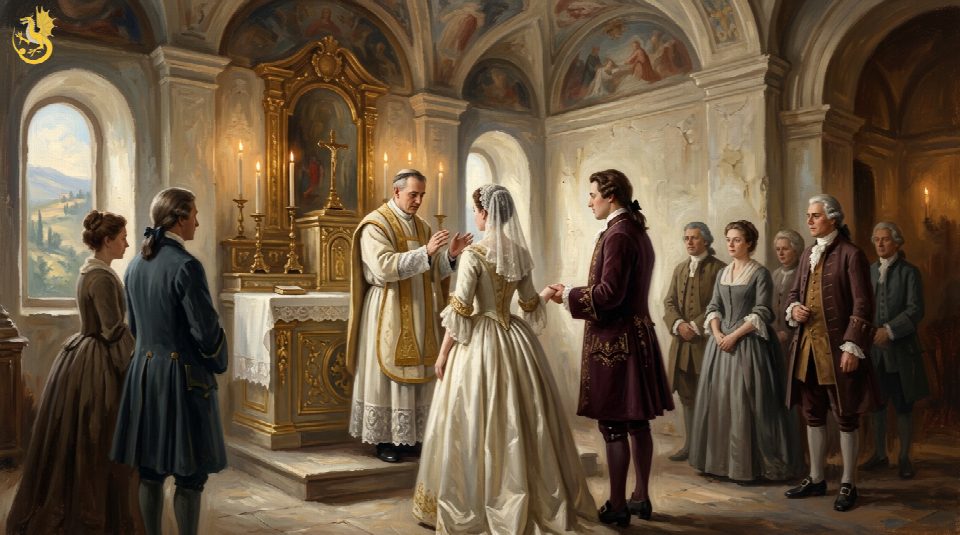
Maria Clementina wed James by proxy in Bologna on 9 May 1719, with James absent and a representative acting on his behalf. They later met and formalised their marriage in September at Montefiascone. Documented
Later that year, the couple established their court in Rome with accommodation provided through papal support. The Sobieski and Stuart families were now united. Documented
The marriage produced two sons: Charles Edward Stuart in 1720 and Henry Benedict Stuart in 1725. Charles is better known as Bonnie Prince Charlie, while Henry later became a cardinal. Documented
For James, a significant dynastic goal had been achieved, ensuring another generation to uphold the family’s claim.
For Maria Clementina, however, life proved far more complex than the political promise of marriage suggested.
Maria Clementina: The Woman Behind the Union
It would be unjust to portray Maria Clementina merely as “the Polish princess who married a Stuart”.
Her marriage was laden with complications.
Disputes arose concerning the management of her household, the influence of James’s favourites, and the upbringing of their children. In 1725, following disagreements over access to her young son Charles and the appointment of his governor, she withdrew to a convent. Documented
This retreat ignited a public political controversy, illustrating how intertwined royal marriage and the cause it was meant to serve could be.
A reconciliation occurred in 1727, but the relationship remained strained. Maria Clementina increasingly devoted herself to religious and charitable activities, aiding the poor and sick in Rome. She passed away in 1735. Documented
The escape adds a dramatic twist to her narrative.
Her later life reminds us that a successful dynastic union does not equate to a happy marriage.
Was There a Possibility for a Stuart to Claim the Polish Crown?
The Polish connection persisted beyond the wedding.
In 1733, following the death of Augustus II, Jakub offered to support James’s candidacy for the Polish crown. Documented
James declined, believing himself bound to pursue the restoration of his own kingdoms and arguing that Poland deserved a ruler dedicated to its interests. Documented
He did express regret that his younger son Henry was too young to be a candidate, explicitly citing the Sobieski lineage in the boy’s blood. Documented
This moment marks a remarkable juncture in this interconnected history.
The Polish heritage of the Stuart children was not merely decorative; it played a significant role in discussions regarding the Polish succession.
Jakub also sought recognition of his grandsons as members of the Polish-Lithuanian nobility through a process known as indygenat. This was crucial for their ability to inherit his Polish estates. The matter remained unresolved at the time of his death in 1737. Documented
Marriage established the familial connection.
Law and politics still dictated the potential of that connection.
Linking the Threads: A Continuous Lineage
For those interested in how we arrived in Poland from a Welsh origin, here is the path we have traversed:
Evidence note: The early Welsh generations follow published medieval pedigrees. Historical records substantiate the later Tudor, Stuart, and Sobieski relationships. This sequence traces a connected family branch, not our direct descent from every individual named.
- Rhodri Mawr.
- Cadell ap Rhodri.
- Hywel Dda.
- Owain ap Hywel.
- Einion ab Owain.
- Cadell ab Einion.
- Tewdwr ap Cadell.
- Rhys ap Tewdwr.
- Gruffydd ap Rhys.
- Rhys ap Gruffydd, the Lord Rhys.
- Gwenllian ferch Rhys, who married Ednyfed Fychan.
- Goronwy ab Ednyfed.
- Tudur Hen ap Goronwy.
- Goronwy ap Tudur.
- Tudur ap Goronwy.
- Maredudd ap Tudur.
- Owen Tudor.
- Edmund Tudor.
- Henry VII.
- Margaret Tudor.
- James V of Scotland.
- Mary, Queen of Scots.
- James VI of Scotland and I of England.
- Charles I.
- James II of England and VII of Scotland.
- James Francis Edward Stuart, who married Maria Clementina Sobieska.
Maria Clementina was the daughter of Jakub Sobieski and granddaughter of Jan III Sobieski, king of Poland. Documented
This journey spans centuries and encompasses a broad narrative. The early Welsh section belongs to the study of medieval pedigrees, while extensive historical records validate the later dynastic connections.
Most importantly, this journey represents an outward exploration through a connected branch of the family, rather than a claim of direct ancestral descent from every individual mentioned.
Reflecting on Our Welsh–Polish Family Connections
Neither royal family succeeded in achieving the restoration they had hoped the marriage would facilitate. The Stuarts did not reclaim the British thrones, and the Sobieskis did not recover the Polish crown. Documented
Yet, their connection narrates a significant European story: diplomacy, captivity, escape, marriage, children, inheritance, and competing visions of the future.
Our contemporary Polish connections are less focused on succession treaties.
My sister’s marriage, the Polish marriage in my wife’s family, and the child my son and his Polish partner are expecting represent a different kind of familial history. These relationships are formed in our current time, carrying their own stories, hopes, and memories.
They do not require a royal parallel to hold significance.
Uncovering that an earlier branch of the Welsh narrative also reached Poland provides an unexpected historical context for those present-day connections.
Centuries ago, influential families allied themselves to secure crowns.
Today, our family expands as individuals discover one another and forge lives together.
The most crucial forthcoming addition to our family will not require a marriage treaty, papal residence, or an escape from imperial custody.
A simple place within the family will suffice.
What began as an effort to preserve Mam’s research has led us to uncover a shared story weaving through Wales, Scotland, and Poland.
Further Reading Suggestions
The references below support the historical families, relationships, and events discussed in this article. The contemporary family details derive from our own family account.
Welsh Lineages and Tudor Origins
-
Rhodri Mawr — Dictionary Of Welsh Biography
An overview of Rhodri and the dynastic branches associated with his descendants. -
Hywel Dda — Dictionary Of Welsh Biography
A detailed account of Hywel’s lineage, career, and significance in Welsh history. -
Rhys Ap Tewdwr — Dictionary Of Welsh Biography
Includes the lineage connecting Rhys with Hywel Dda. -
Gruffydd Ap Rhys — Dictionary Of Welsh Biography
Background on Rhys ap Tewdwr’s son and husband to Gwenllian ferch Gruffudd. -
Gwenllian, Wife Of Gruffydd Ap Rhys — Dictionary Of Welsh Biography
An account of the earlier Gwenllian, the mother of the Lord Rhys and part of the ancestral couple highlighted in our family research. -
Rhys Ap Gruffydd, The Lord Rhys — Dictionary Of Welsh Biography
An overview of the Deheubarth ruler and his lineage. -
Ednyfed Fychan And His Descendants — Dictionary Of Welsh Biography
The main source for Gwenllian ferch Rhys, her son Goronwy, and the generations leading to the Tudors of Penmynydd. -
Owen Tudor — Wikipedia
An introductory overview of Owen’s family, his relationship with Catherine of Valois, and his place in Henry VII’s ancestry.
Scottish and Stuart Connections
-
Margaret Tudor: My Lady, The King’s “Defiant” Mother — Historic Environment Scotland
Margaret’s role bridging the Tudor family and James V of Scotland. -
History And Stories: Stirling Castle — Historic Environment Scotland
The royal setting linked with James IV, Margaret Tudor, and their successors. -
House Of Stuart — Encyclopaedia Britannica
An overview of the dynasty, including James V, Mary, Queen of Scots, and James VI. -
James VI And I — The Royal Family
Details about his lineage and significance within the Scottish and English monarchies. -
Charles I — The Royal Family
Information regarding the subsequent generation in the Stuart line. -
James VII And II — The Royal Family
Background on James Francis Edward Stuart’s father. -
Stuart, Cumberland and Melbourne Papers — Royal Collection Trust
An introduction to archival material concerning the exiled Stuarts.
The Significance of the Polish Marriage
-
The Royal Families Of Sobieski And Stuart — Edward Corp, Museum Of King Jan III’s Palace At Wilanów
The primary source detailing the marriage negotiations, financial arrangements, escape, family life, discussions on Polish succession, and inheritance issues. -
Maria Clementina: “The Unrealised Queen” — Dr A. R. Gillespie, Gale
Research based on the Stuart Papers, analysing Maria Clementina’s engagement, imprisonment, marriage, correspondence, and later life. -
Edward Corp, The Stuarts in Italy, 1719–1766: A Royal Court in Permanent Exile. Cambridge University Press, 2011.
-
Peter Pininski, Bonnie Prince Charlie: His Life, Family, Legend. National Museums Scotland, 2022.
-
Richard K. Maher, editor, The Irish to the Rescue: The Tercentenary of the Polish Princess Clementina’s Escape. Peter Lang, 2021.
The post The Polish Connection: House of Rhodri Uncovered appeared first on Limits Of Strategy.