Are you often clearing delicate spider webs from your window frames? These webs are usually spun by black house spiders. If you are also spotting white tails on your floors at night, there may be a direct connection between these two observations.
While it is necessary to remove the webs, this action does not resolve the root problem. Let’s explore why these webs keep reappearing, why white tails are attracted to your home, and the practical solutions that can be applied.
Identifying Black House Spiders and Their Unique Web Structures
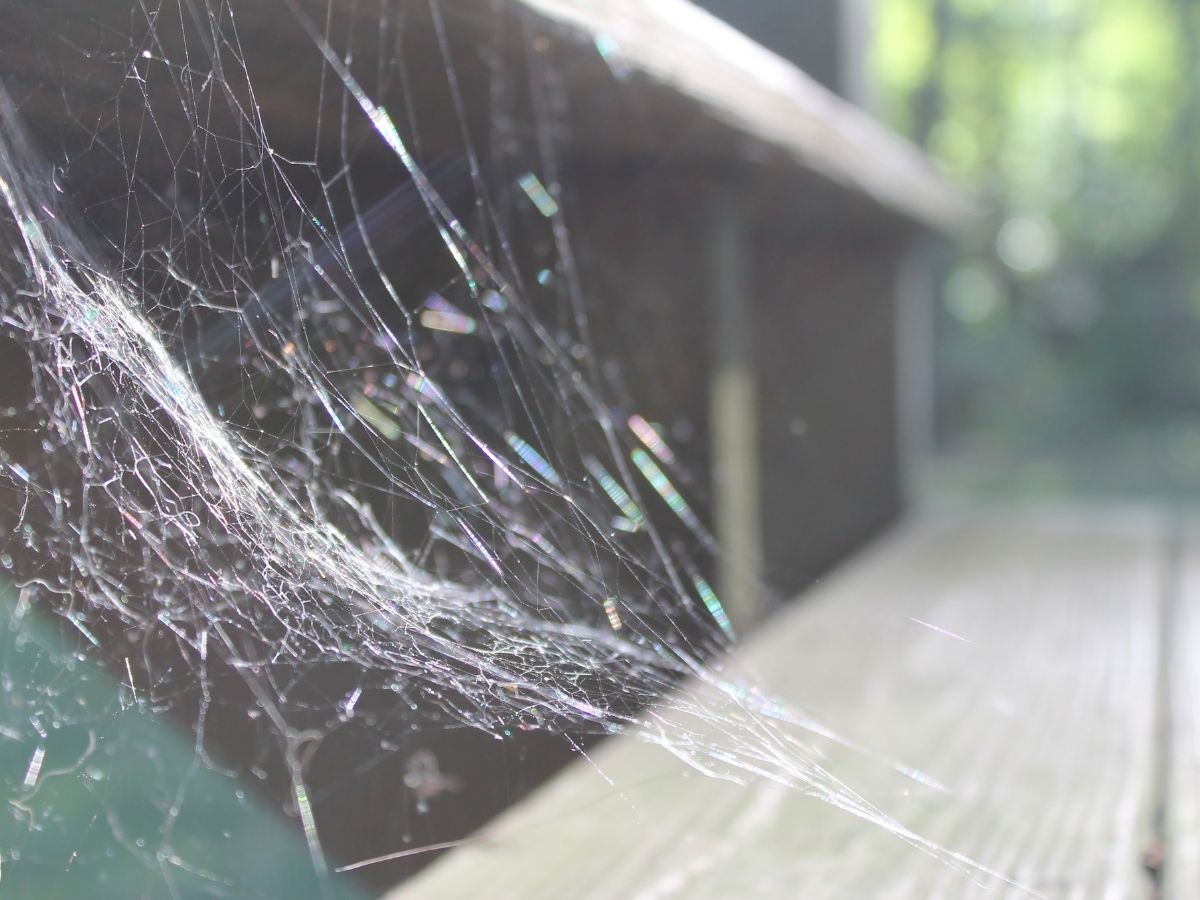
You may recognise a black house spider by its web long before you actually see the spider. The Australian Museum describes these webs as intricate silk sheets that extend outward, featuring one or more funnel-shaped openings that lead back to the spider’s hiding place.
Fresh silk has a fine texture and is arranged in a zigzag pattern. Over time, older webs become tangled and messy, adopting a grey, woolly appearance as the spider adds new layers.
Here are some key characteristics to note:
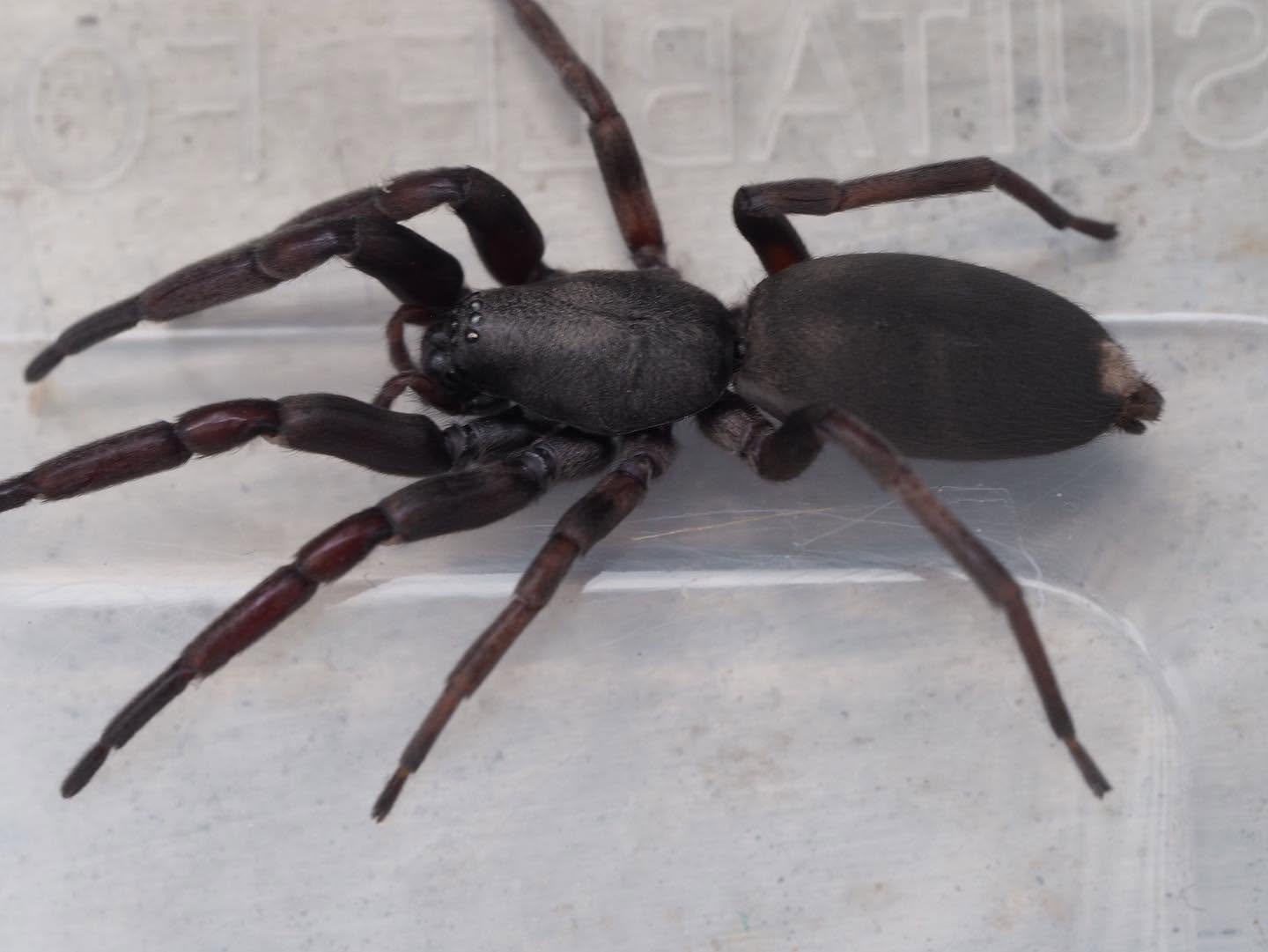
- The spider: A sturdy, dark spider covered in grey hairs on its front body, with dark brown to black legs and a charcoal-grey abdomen that may show subtle white markings. Female spiders are larger than their male counterparts.
- The web: A messy, lacy sheet with a funnel or hole at its centre, providing a retreat for the spider when it feels threatened.
- The location: Common hiding spots include window frames, wall crevices, tree trunks, logs, and rock walls, as noted by the Museum.
- The egg sacs: White silk egg sacs hidden within the spider’s retreat, which the female spider diligently guards until they hatch.
In Melbourne homes, these webs often appear in the corners of window frames, gaps in brickwork, beneath eaves, and along fences. If you are unsure about what you’re seeing, feel free to send us a photo for identification.
Why Removing Black House Spider Webs Alone Is Not Enough
While clearing away the webs removes the silk, it often does not eliminate the spider itself. The Australian Museum explains that adult black house spiders usually find secure hiding spots in deep crevices.
When the web is cleared, the spider often remains concealed in the crack behind it. The Museum further notes that female spiders tend to stay with their webs unless forcibly displaced, continually adding new layers. It’s important to realise that new silk is mainly laid at night.
This is why webs frequently reappear in the same locations shortly after being cleared. It is the same spider in the same crevice producing fresh silk.
Window frames serve as a preferred habitat for black house spiders because they feed on insects like moths and beetles, which are attracted to the light of windows and lamps at night. This light draws in insects, providing a food source for the spiders.
Continue to brush away webs, however. The Australian Museum advises that removing house spider webs helps control the population of white tails, making this action worthwhile.
This is just the first step toward a solution. The recurrence of webs in the same spots indicates that the spiders are still residing there.
Why Are White Tail Spiders Drawn to Homes? Their Hunt for Black House Spiders
White tail spiders often invade homes as they hunt for black house spiders, their preferred prey. The Australian Museum states that during the summer and autumn months, white tails frequently appear in and around houses, where they find sheltered spots and an abundance of black house spiders to feast upon.
The Museum identifies white tails as natural predators of black house spiders. Health.vic supports this, noting that white tails often venture into our homes in search of other spiders, including black house spiders.
While black house spiders are a primary target, they are not the only ones. The Museum has documented white tails preying on daddy long legs, redbacks, and other spiders. Black house spiders on your window frames are particularly vulnerable, making them a prime choice.
The Museum recommends capturing and removing any white tails you encounter and clearing away the webs of the house spiders they hunt. The webs indicate the location of the spiders, which are the very targets the white tails seek.
For more information on white tails, including advice on what to do if you are concerned about bites, please visit our spider control page.
What Causes White Tail Spiders to Be More Active at Night?
You are likely to spot white tail spiders at night, as this is when they are most active. Both the Australian Museum and Health.vic highlight that they are primarily nocturnal, roaming around in search of other spiders to prey upon.
Unlike many other spiders, white tails do not build webs and wait for prey. Health.vic points out that they only create temporary silk retreats for moulting and laying eggs, which keeps them mobile. The Museum adds that specialised hairs on the ends of their legs allow them to travel across smooth or sloping surfaces, which is why they often find themselves on walls, ceilings, and floors.
When these factors come together, window frames become active zones after dark. Insects are drawn to the light, black house spiders lay new silk to ensnare them, and white tails venture out in search of their prey.
As a result, some of these white tails may find their way indoors.
Health.vic advises that effective spider control begins with preventing spiders from entering your home. Installing flyscreens on windows and using weather strips or draught excluders under doors can significantly reduce their chances of access. These precautions are especially beneficial for frequently used doors and windows.
How to Implement Comprehensive Treatment for Black House Spiders and Their Webs
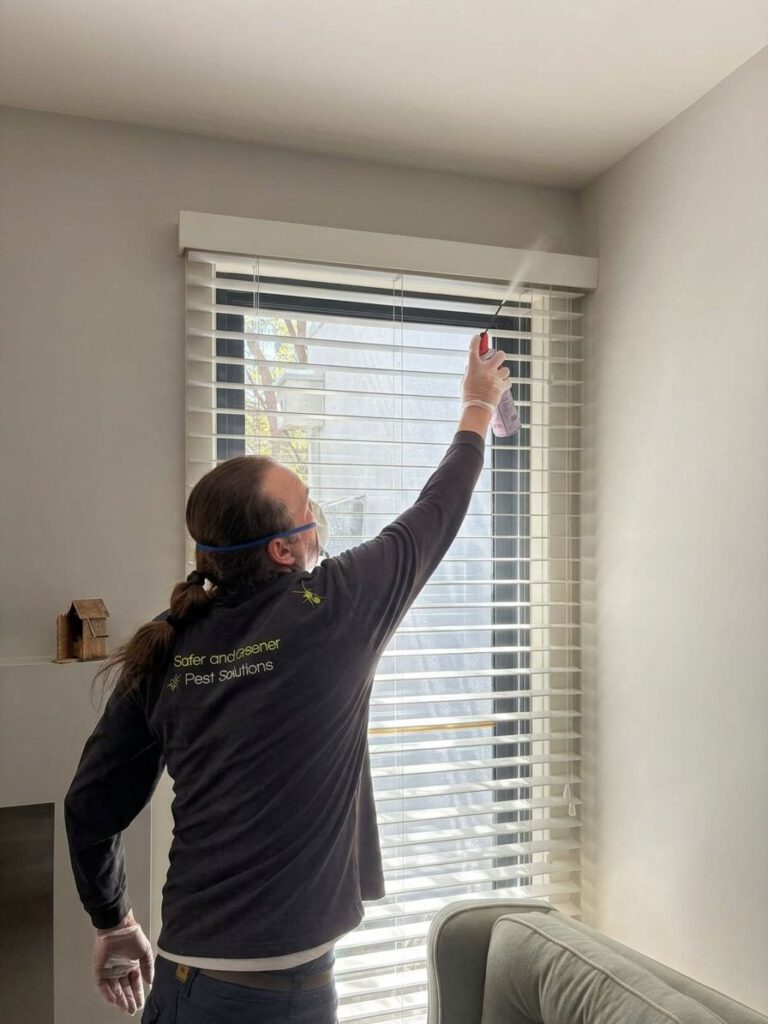
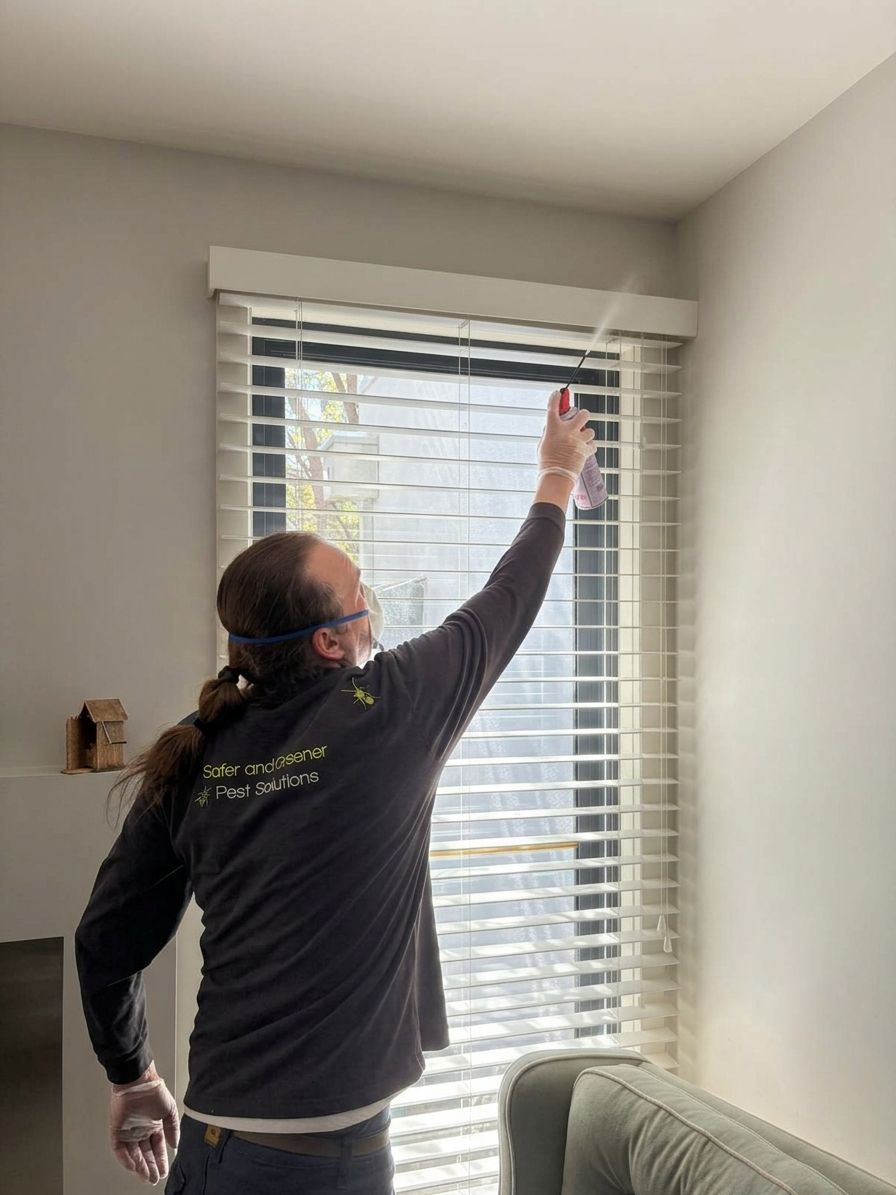
The essential step in addressing the issue is treating black house spiders at their residence, not just removing their webs. Our spider treatment involves applying a surface treatment in areas where spiders rest, allowing them to come into contact with it as they move about.
On the exterior of your home, this means treating areas where black house spiders typically construct their webs:
- Eaves and gutter lines: These sheltered areas are where spider webs first accumulate.
- Window and door frames: Treated from the outside, especially in the corners where lacy webs form.
- Outside walls and weep holes: These are the gaps and crevices found low on the brickwork.
- Fences, pergolas, and alfresco areas: Common resting spots for spiders around the garden.
- The garden and washing line area: Areas frequently traversed by family members.
By treating the spiders outside your home, you reduce the likelihood of white tails entering.
This approach is why many families with children and pets prefer an outside-only treatment. There is no need for anyone to vacate the house, and the pests are effectively managed at the entry points and weep holes.
If you are considering whether to choose an outside-only treatment or an inside-and-out option, our guide on selecting between the two explains the differences. To gain insight into your home from the perspective of crawling pests, take a stroll around the exterior of your house first.
One important point after your treatment: remnants of old webs may remain until they are either brushed down or naturally disintegrate. Be sure to remove what you can reach.
Optimal Timing for Scheduling Spider Treatments: Once or Twice Annually
Most homes in Melbourne typically receive one or two general pest treatments each year, with spider control included in these services. It is recommended to schedule your first treatment before the warmer months, as this is when spider activity peaks and webbing accumulates quickly.
This timing coincides with the lifecycle of the spiders themselves. The Australian Museum states that black house spiders mature during summer and generally live for about two years, while white tails are most commonly observed around homes during summer and autumn.
If you notice those lacy webs returning to your window frames later in the year, or if white tails reappear in your hallway, contact us to discuss whether a second treatment may be necessary.
You can check the costs for a general treatment based on the size of your home on our pest control prices page. When you are ready, schedule your spider treatment with SOS Pest Control and let us know where the webs keep reappearing.
Common Questions Regarding Black House Spiders
Are Black House Spiders Related to Funnel-Web Spiders?
No, they are not. The funnel-shaped entrance of their webs may cause confusion. The Australian Museum clarifies that black house spiders are not related to Australian funnel-webs and differ significantly in appearance, size, and life cycle. Health.vic notes that black house spiders are often mistaken for funnel-webs, especially since Sydney funnel-webs are absent from Victoria.
What Are the White Sacs Found in Black House Spider Webs?
These are egg sacs. The Australian Museum explains that the female spider creates several white silk egg sacs, secures them within her retreat, and stays with them until they hatch. The spiderlings then disperse. If you notice egg sacs on your window frames, expect more black house spiders to emerge soon.
Are Black House Spiders Dangerous?
The Australian Museum describes black house spiders as generally timid, with bites being infrequent. Most people prefer not to have them around, which is understandable. For concerns regarding bites, please consult our spider control page and speak with your doctor.
Will an Outside-Only Treatment Effectively Target Black House Spiders?
Yes, as this is where they reside. Black house spiders typically build their webs on eaves, window frames, walls, and fences, all of which are addressed by an outside treatment. Spiders already inside, such as those in ceiling corners or behind curtains, will require inside treatment as well, so please inform us of any indoor spider sightings when you book.
Original Article First Published At: Why White Tails Follow the Black House Spiders on Your Window Frames
The Article: White Tails and Black House Spiders on Your Window Frames first appeared on https://writebuff.com
The post White Tails and Black House Spiders on Window Frames appeared first on Limits Of Strategy.