Are you contemplating managing your own slab, shed, or footings pour? Hiring a concrete line pump as a DIY builder is not just practical; it’s an intelligent and cost-effective choice. With proper preparation and a proficient crew by your side, you can significantly reduce expenses, adhere to your schedule, and pour concrete with professional finesse.
At Hunter Concrete Pump Hire, we frequently partner with owner-builders throughout Newcastle, the Hunter Valley, and the Central Coast. Whether you require assistance in sourcing concrete, organising labour, or coordinating the concrete pour, our dedicated team is committed to streamlining the entire process for you, ensuring a smooth experience from start to finish.
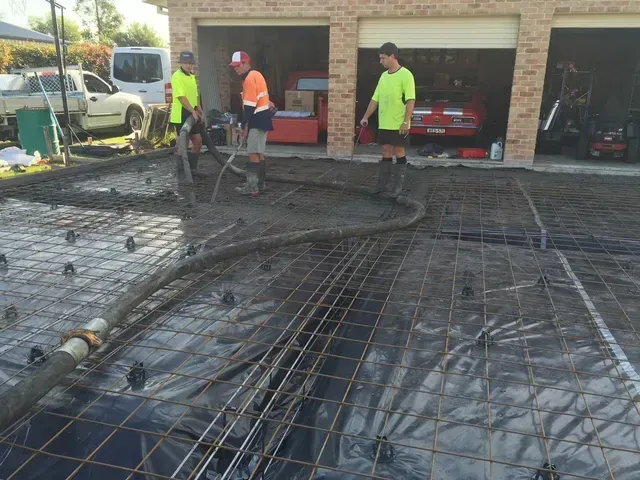
1. Essential Steps for Successfully Planning Your Concrete Pump Hire as a DIY Builder
Before proceeding to book your pump, it is crucial to evaluate several key factors to ensure a successful pour:
- Site Access: Is there ample space for a line pump to be positioned conveniently near your pour area? Is the ground level and appropriate for a secure setup?
- Pour Size and Timing: What is the anticipated volume of concrete required in cubic metres, and when will the site be prepared for the pour?
- Type of Job: Are you tackling a backyard slab, a shed base, footings, or a driveway?
If you are uncertain about the type or quantity of the concrete mix you need, our team can assist in calculating the total concrete required based on your specified measurements and thickness. This ensures you make the right order the first time, reducing waste and ultimately saving you money.
How to Precisely Calculate Your Concrete Needs for Optimal Results
Concrete is measured in cubic metres (m³). To determine how much you’ll need for a slab or footing, apply the following formula:
Length (m) × Width (m) × Depth (m) = Volume (m³)
Ensure that all measurements are in metres. For example:
A slab measuring 8 metres in length, 5 metres in width, and 100mm in thickness (0.1m) calculates as follows: 8 × 5 × 0.1 = 4.0m³
However, it is advisable to avoid ordering the exact quantity needed. Always round up by 10% to accommodate wastage, variations in formwork, or spillage at the pump. Thus, in this scenario, you would need to order 4.4m³.
For more examples, please refer to our detailed calculations page.
Thorough Volume Reference Guide for Common Slab Dimensions
| Slab Size (m) | Thickness (mm) | Volume (m³) | Add 10% Overrun | Final Order (m³) |
| 4 × 4 | 100 | 1.6 | 0.16 | 1.8 |
| 6 × 6 | 100 | 3.6 | 0.36 | 4.0 |
| 8 × 5 | 100 | 4.0 | 0.40 | 4.4 |
| 10 × 6 | 150 | 9.0 | 0.90 | 9.9 |
| 12 × 10 | 100 | 12.0 | 1.20 | 13.2 |
2. Efficiently Manage Your Concrete Supply with Our Expert Guidance
Rather than scrambling to find suppliers at the last minute, you can rely on our extensive industry experience. We work closely with local concrete plants to schedule your delivery, ensuring it perfectly aligns with your pump hire, thus enhancing efficiency and reducing stress.
Our services also include:
- Handling tight access situations with professionalism
- Understanding primer application requirements
- Considering the necessary pump setup length
- Your preferred start time for the pour
By coordinating all elements through us, you eliminate the complications of dealing with multiple contractors on pour day, resulting in a more streamlined and effective operation.
3. Access Skilled Labour Support for Your DIY Project When You Need It
While some DIY builders may have a reliable crew ready, others might find themselves short-handed. If you require additional help, simply inform us. We can connect you with experienced concreters who specialise in screeding, finishing, and edging slabs competently — ensuring that your project continues without unnecessary delays or issues.
This support proves particularly beneficial if:
- This is your first time pouring concrete
- You need assistance managing the concrete mix effectively
- You are working with coloured or polished finishes that require expertise
4. What Should You Anticipate on the Day of Your Concrete Pour?
Here is a comprehensive overview of what to expect when we arrive at your site:
- Setup and Primer Application: We will establish the pump, hoses, and create a secure work zone. Primer is applied to ensure smooth flow through the line.
- Concrete Delivery Arrival: The <a href=”https://writebuff.com/avoid-these-common-hiring-mistakes-for-concrete-pumps/”>concrete trucks</a> will arrive at the scheduled time, and we will maintain direct communication with the driver to guarantee everything proceeds seamlessly.
- Pumping and Concrete Placement: The concrete is pumped efficiently into your formwork. Our team will guide either your workers or our own throughout the pour sequence to ensure accuracy and efficiency.
- Final Cleanup: Once the pour is complete, we will thoroughly wash out the line and remove all equipment from the site.
Our goal is to provide a clean, precise, and efficient service. Every task is executed swiftly and professionally, leaving no mess for you to deal with.

5. What Essential Aftercare Steps Are Required Following Your Concrete Pour?
Once the concrete has been successfully placed, your responsibilities include:
- Keeping it moist as needed, especially during hot weather
- Protecting it from rain or debris that could cause damage
- Fencing off the area to safeguard it from children or pets
We will provide guidance on timing if you plan to cut control joints, apply sealers, or install any fixtures post-pour. If you have any queries in the days following the pour, we remain just a phone call away to assist you.
Discover Why More Owner-Builders Trust Our Concrete Pump Hire Services
- We simplify your project by effectively managing both the concrete supply and pump hire.
- We arrive punctually, fully prepared, and ensure a thorough cleanup afterwards.
- Our pricing is competitively structured on a flat-rate basis, and we can offer skilled labour if required.
- As locals, we have invaluable insights into ground conditions, weather patterns, and optimal mix types for the area.
With no unnecessary complications, we deliver straightforward, professional concrete pumping support specifically designed for DIY projects.
Common Inquiries from DIY Builders About Concrete Pump Hire
Do I require a license to hire a concrete pump for my DIY project?
No specific license is necessary to hire a concrete pump as an owner-builder. Our licensed operator will manage the machinery while you focus on preparing the site and the formwork efficiently.
How much notice is recommended to book a concrete pump?
We suggest providing a notice period of at least 3 to 5 days. During peak times, allowing a week or more ensures your preferred time slot and pump size are readily accessible.
What type of concrete mix should I consider using?
The appropriate mix is contingent on your specific project requirements — a standard 20 MPa mix is ideal for most slabs and driveways, whereas footings, polished finishes, or shed bases may necessitate a higher-strength or coloured mix. Our team is here to assist you in selecting the most suitable option.
Can you help me figure out how much concrete I require?
Absolutely! Just provide us with the length, width, and thickness of the pour in metres. We will calculate the volume for you and include a 10% overrun for safety.
Is it feasible for me to execute the pour without extra labour support?
You can manage it if you have experience and one or two helpers. However, if you lack assistance, we highly recommend utilising our concreting labour. This will prevent potential delays and mistakes that could incur additional costs in the long run.
The Article: Concrete Pump Hire for DIY Builders: Step-by-Step Guide first appeared on https://writebuff.com
The Article Concrete Pump Hire: A DIY Builder’s Step-by-Step Guide Was Found On https://limitsofstrategy.com