Last Updated on June 18, 2026 by David
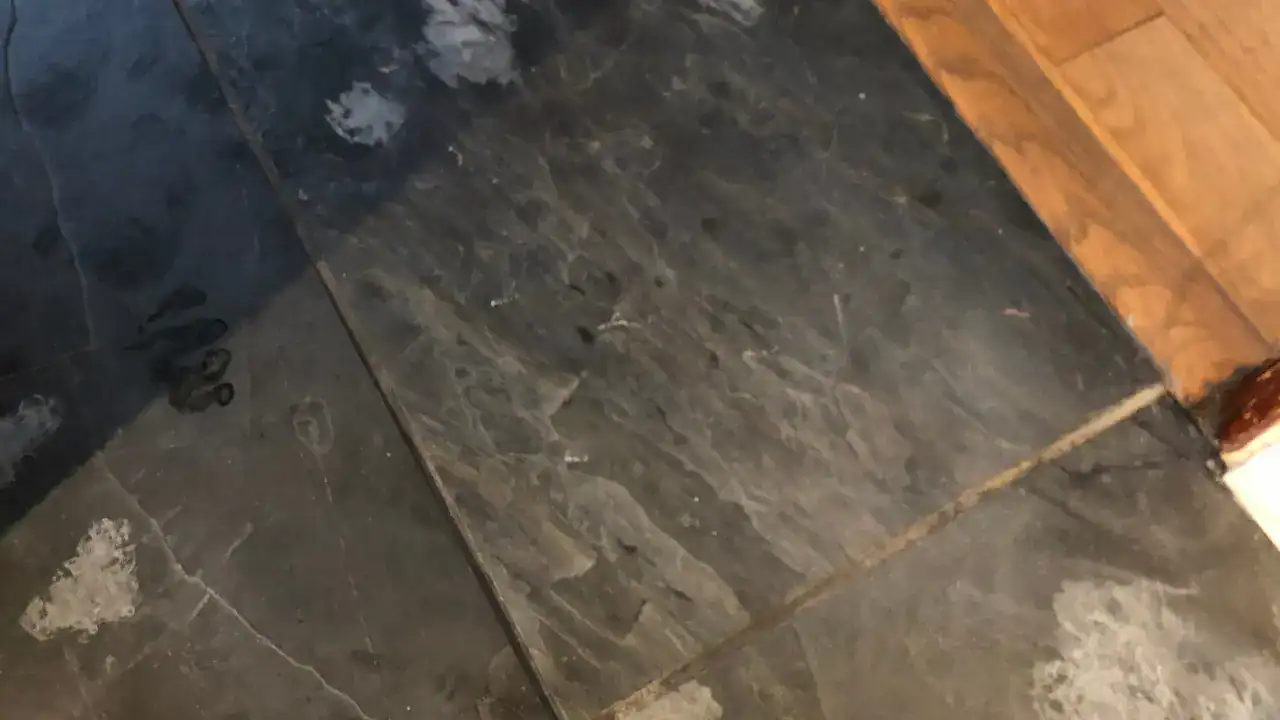 If you notice your slate floor in this condition, it may indicate that loose layers are still detaching.
Flaking slate floor with flaking areas removed prior to cleaning and sealing
This situation is more than just dirt accumulation. The underlying causes may include loose cleavage layers, deteriorating sealants, powdery residues, wear from foot traffic, or surface degradation. A comprehensive professional evaluation is essential to accurately identify the causes before deciding on repair, cleaning, or sealing options.
How Can You Identify the Causes of Flaking and Shedding on Your Slate Floor?
How to Recognise Visible Flakes That Resemble Stone Fragments
If your slate floor starts to flake after cleaning, the detached pieces may appear as small chips rather than regular dirt. Homeowners often observe this phenomenon after mopping, especially when new fragments emerge as the floor dries, giving the impression that the cleaning was ineffective.
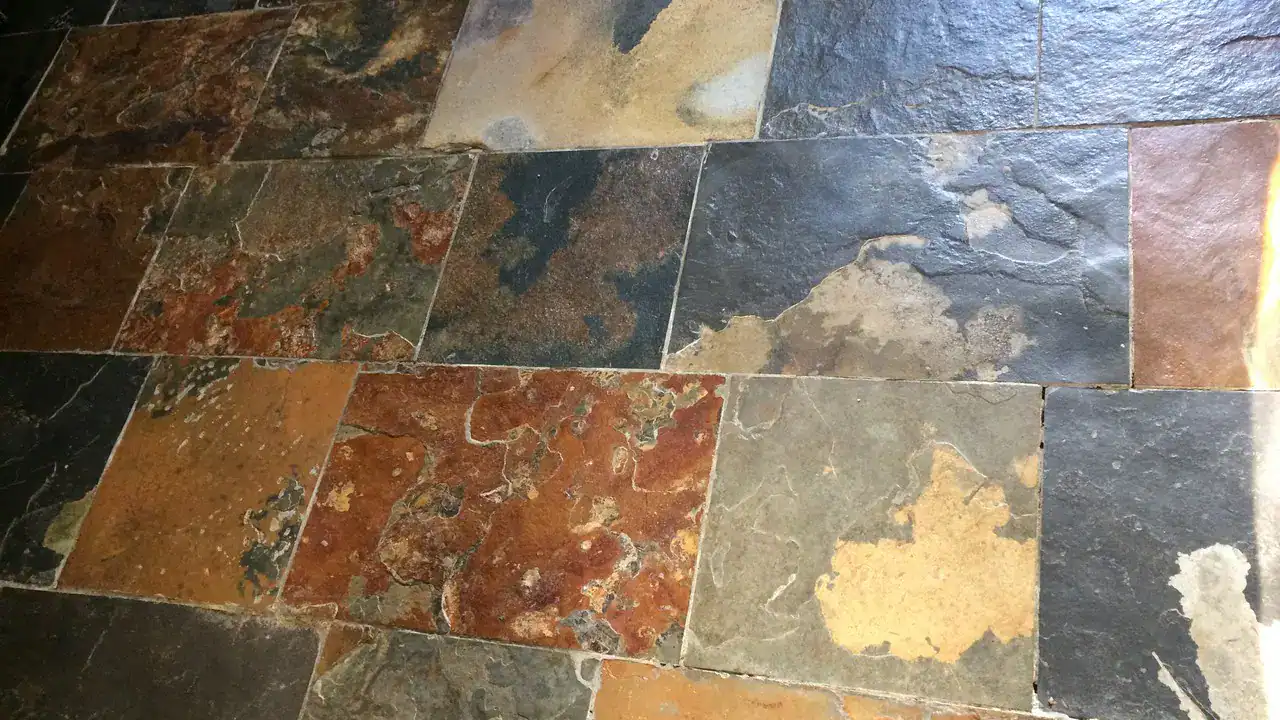 If your floor exhibits this condition, it suggests a potential degradation of the surface.
If your slate continues to release flakes, grit, or powder, it indicates a more serious issue than mere dirt accumulation.
These flakes serve as critical indicators that material is detaching from the surface. The key difference lies in the shape of the debris. Stone-like fragments typically feel sharp or gritty, while peeling finishes have a thinner, film-like texture. The term “delamination” describes layer separation, but for homeowners, the simpler clue is that the floor consistently produces new fragments instead of merely accumulating dirt.
Identifying any loose surface layers is essential before deciding on a repair strategy. The observable issue may stem from the tile material itself, an aging coating, or powder forming as a sealer deteriorates. When debris predominantly appears in high-traffic areas, kitchen paths, or near exterior doors, this pattern provides insights into the underlying cause.
What Causes Gritty Residue to Reappear After Mopping?
If your slate floor leaves gritty deposits after drying, the issue typically goes beyond a dirty mop. Grit can originate from outdoor soil, loose particles trapped within the textured finish, or fine material released from the surface.
Powdery residues often manifest as dull dust, light smudges, or a chalky film accumulating in the low grooves and grout lines. It may resurface after multiple cleanings because water redistributes the loose material, only for it to settle back as the floor dries. This creates familiar challenges: cleaning becomes difficult, the surface becomes contaminated, and colour loss occurs, leaving the floor looking dull even after washing.
Ongoing gritty debris differs from a one-time dirty wash. Regular grime diminishes with careful cleaning. The persistent reappearance of fresh powder suggests that the surface or coating remains compromised. When debris primarily appears in high-traffic areas, loose grit can wear down the texture and create pale, chalky trails.
How to Identify Peeling Areas That Signal Finish Failure
Peeling patches on slate often resemble skin, varnish, or a thin film lifting from the tiles. Some regions may look vibrant, while others appear flat due to old sealants wearing unevenly across recessed areas, edges, and frequently trafficked paths.
Finish failure can mimic stone deterioration since coating fragments may appear as flakes. Buildup along edges near skirting boards, topical excess around grout lines, and application residue in lower areas all contribute to uneven finishes that homeowners might misinterpret as stone damage. Understanding this distinction is crucial; a peeling coating requires a different approach compared to loose slate layers.
Patchy colour following washing can also create visual confusion. Wet slate typically appears richer than dry slate, making a floor seem enhanced during cleaning but then reverting to a paler state as moisture evaporates. This behaviour is common in faded slate, colour reduction, and surface dullness; further details on related colour patterns can be found in why some slate looks faded while others stay vibrant.
How to Spot Rough Areas That Indicate Surface Degradation
Rough patches on slate are significant because tactile feedback often confirms what visual cues suggest. If the floor feels scratchy in areas that appear pale, it typically signals surface wear rather than merely cleaning residue.
Surface shaling refers to the loosening and shedding of the upper texture. Homeowners notice roughness, a smoother finish developing on elevated points, and dark or black slate losing its vibrancy in the busiest sections. Terms like coarse pads, milling, industrial diamonds, slurry, and weighted buffers belong in discussions with professionals rather than attempts by homeowners, as aggressive actions can permanently damage the surface.
Loose surface material does not always indicate that the entire floor is failing. Localised shedding near doors, beneath furniture, or along kitchen paths may reflect grit, furniture movement, scuffing, and normal foot traffic damage affecting a textured finish. Widespread loose layers across multiple tiles suggest a more serious issue, especially if cracking, chipping, or moisture penetration is also evident.
How Do Dark Grout, White Residue, and Irregular Drying Complicate Diagnosis?
Grout lines can intensify slate issues since dirty water settles in the joints and dries, forming dark lines. A homeowner might mistakenly believe the tiles are still dirty when the actual problem lies in the joints, edges, and recessed areas retaining contamination.
White marks require careful interpretation. They may signify salt traces, hard-water mineral deposits, over-applied impregnator whitening, or residue left after cleaning. Using vinegar, bleach, or limescale removers can exacerbate the situation, as acidic cleaners and harsh household products can strip sealants, alter colours, and cause irreversible damage to natural stone surfaces. A neutral cleaner and controlled moisture are safer for observation, while comprehensive maintenance procedures are outlined in how to clean slate floors when they stay dull.
Proper ongoing maintenance protects slate by removing grit before wet mopping and minimising the abrasion that leads to pale pathways. Utilising a two-bucket system, a well-wrung mop, and pH-neutral cleaning solutions helps keep the floor cleaner longer since dirty water is not reintroduced into the textured finish. Based on my experience, effective grit removal before wet cleaning, timely resealing, and consistent maintenance are crucial for prolonging the lifespan of slate floors.
What Are the Reasons Behind Persistent Flaky or Gritty Patches?
Persistent flaky or gritty patches generally indicate that the underlying issue remains active, either beneath or on the surface of the slate. The floor may be shedding along mineral planes, trapping moisture beneath a coating, or releasing old application residues from edge buildup and recessed areas.
Cleaning eliminates debris, but it cannot address an ongoing cause.
Slate has a layered structure, and these natural cleavage planes create a risk of delamination if a weak boundary begins to separate. Moisture accumulation can lead to high humidity levels, trapped water, and vapor movement, resulting in chalky residues or sealant failure if the floor is sealed too soon. Excess sealant can also obscure the true surface beneath topical buildup. This is why repair decisions should follow a careful diagnosis instead of relying on guesswork; related repair thresholds are discussed in slate floor repair in Pilton.
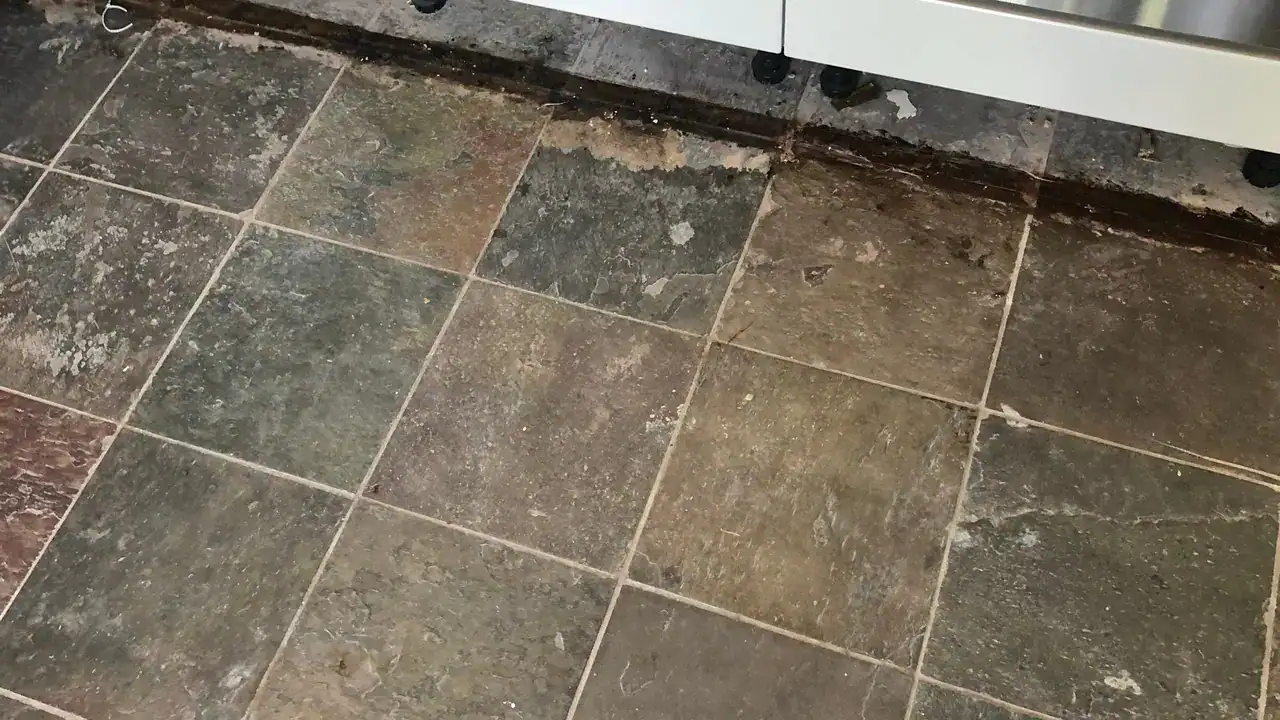 Recurring debris often indicates that the underlying cause is still active. If the same gritty patches keep reappearing after cleaning, the root may lie beneath or within the surface rather than on top of it.
How Can Misdiagnosis Exacerbate Slate Floor Problems?
Scrubbing, steaming, or stripping a slate floor before identifying the underlying cause can turn a visible issue into lasting damage. A manageable residue problem can escalate into surface deterioration if friction drags loose grit across the textured surface, worsening microscopic damage in high-traffic areas.
Steam-induced sealant failure is a maintenance misstep where steam cleaning causes heat damage, moisture infiltration, and degradation of the coating. Homeowners may see surface peeling, loss of protective layers, and an increased risk of flaking because the softened film loses adhesion. This instability compromises the floor.
Traffic wear results in pale pathways, surface dullness, and colour loss in frequently used areas. Spalling leads to a flaking surface, peeling layers, and weakened regions where moisture stress or heat exposure promotes layer separation. The floor will look significantly improved after professional restoration, provided the cause is accurately identified. A professionally restored and properly sealed floor is much easier to clean and maintain than one that is worn or improperly treated.
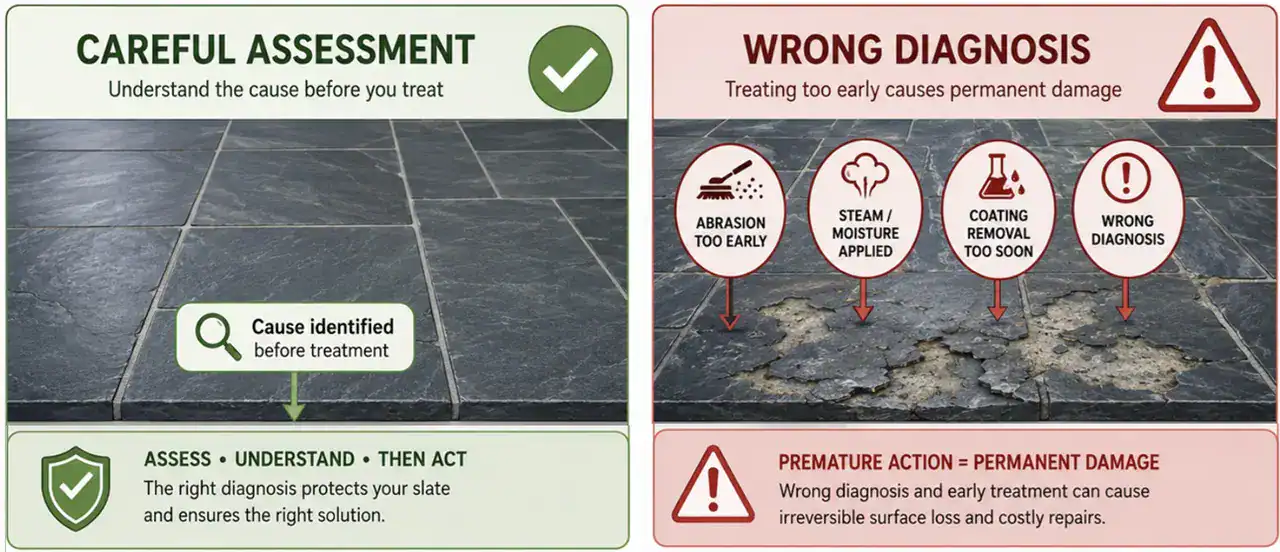 This illustrates the consequences of incorrect diagnosis—treatment can worsen slate damage.
If the cause is misidentified, cleaning, steaming, or abrasion can turn a manageable slate issue into lasting surface damage.
How Can You Distinguish Between Wear, Moisture, or Coating Failure as the Cause of Damage?
A pattern of damage across high-traffic routes, damp edges, grout lines, or areas affected by old coatings often reveals the actual cause of slate failure. The safest diagnosis begins by correlating what homeowners observe with the locations of these conditions.
- Check if pale pathways follow high-traffic areas, as loose grit and foot traffic typically lead to surface wear.
- Determine if whitening occurs near edges or grout, since failed grout can allow water to migrate through joints, causing salt whitening.
- Observe whether the floor gradually darkens as it dries, as substrate moisture and trapped water can resemble staining.
- Look for patchiness corresponding to zones affected by old coatings, since over-applied impregnators can lead to whitening, dead sealants, and excess surface residue.
The riven surface texture complicates this diagnosis because mechanically split slate retains soil in its natural cleavage lows. Conversely, a fine-honed slate floor has a smooth, consistent surface that diffuses light evenly. An impregnating sealer maintains the natural riven texture, while a topical sealer adds a low surface sheen.
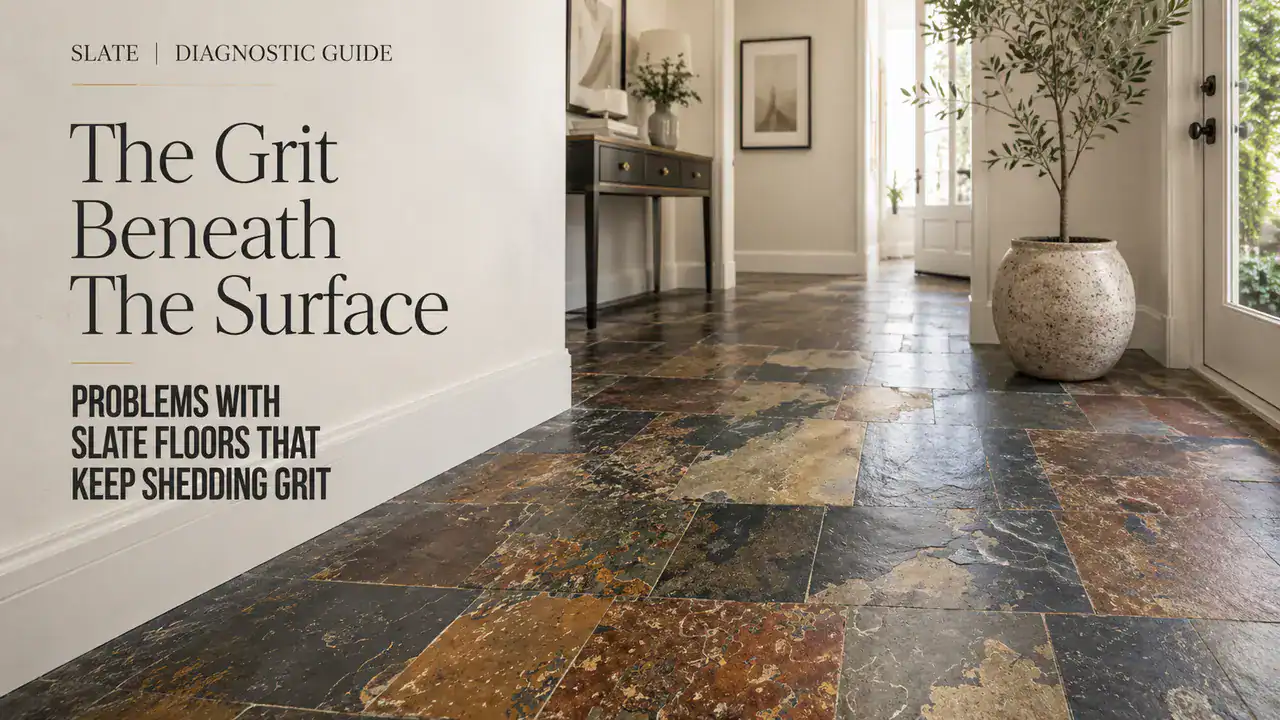
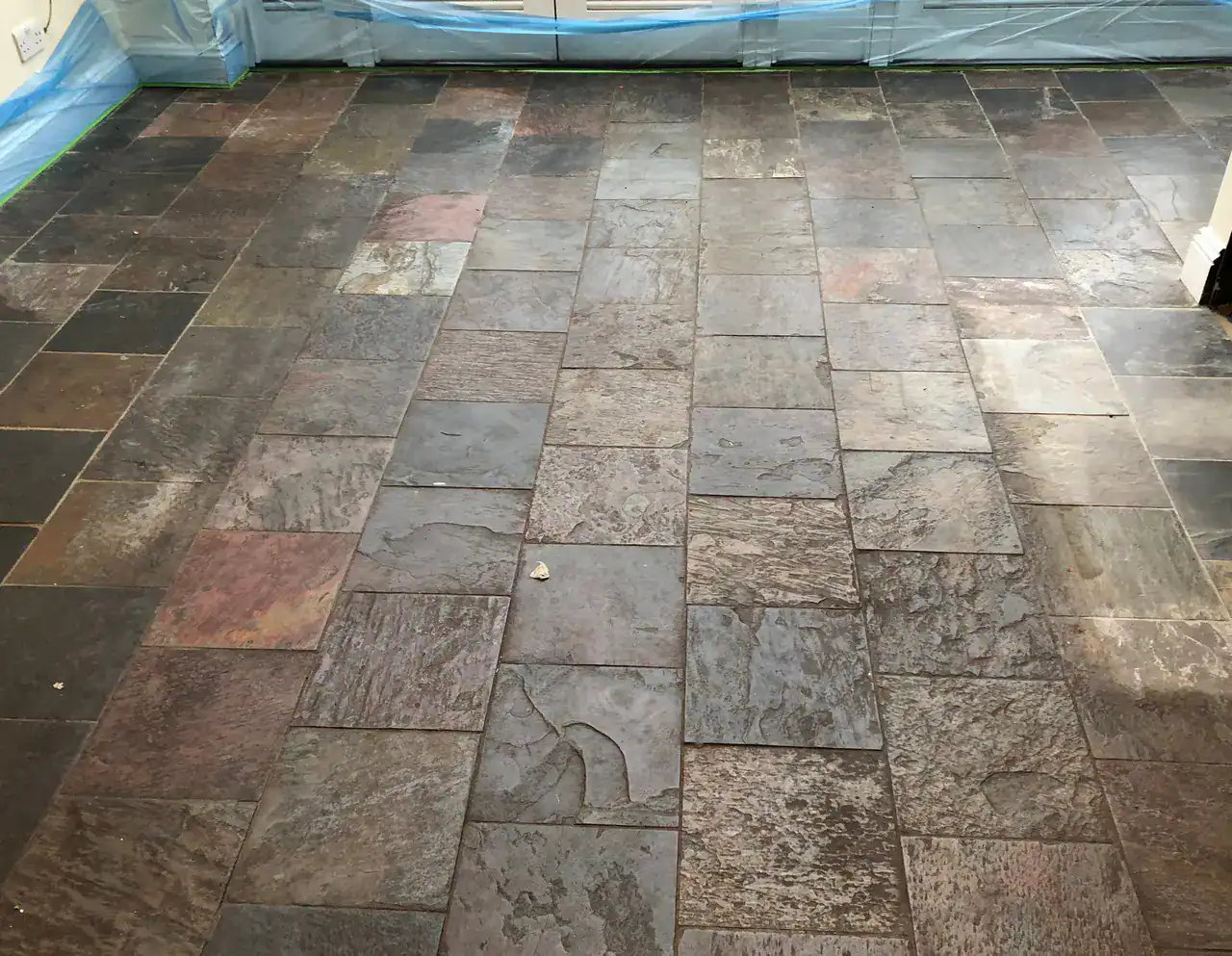 If your floor presents this appearance, the damage pattern can provide insights into the underlying cause.
If the damage aligns with pathways, damp edges, or areas affected by old coatings, the pattern often indicates the likely cause.
What Steps Should You Take Once You Understand the Cause of Slate Surface Degradation?
After identifying the cause, the next step is to determine the safest approach for comprehensive slate care without resorting to guesswork. Layer separation, coating buildup, and old shaling each suggest a different course of action. The following information clarifies behaviours and safe options rather than promoting a one-size-fits-all solution.
Slate is a fine-grained metamorphic rock that cleaves along natural planes. Its layered structure prohibits mechanical polishing, limits restoration to cleaning and sealing, and renders it sensitive to aggressive cleaning chemicals. The floor can appear dramatically improved, often better than upon initial installation, when residue, sealant failure, and colour response are effectively managed. Further discussion on broader material behaviour, care strategies, and safe transition routes is available in slate floors in UK homes.
Appropriate next steps depend on whether the floor requires cleaning, local repair, tile replacement, or a sealing reset. Case studies can assist homeowners in comparing similar behaviours, including slate floor cleaning in Corris and slate floor cleaning and sealing in Priddy.
Recommended Products for Effective Slate Floor Care
The original HTML for this diagnostic article did not contain any third-party product links. Product recommendations are not provided here.

David Allen — Abbey Floor Care
David Allen has been resolving slate floor issues, including flaking surfaces and diagnosing coating failures, for Abbey Floor Care for over 30 years. His diagnostic approach focuses on distinguishing genuine layer separation from failed sealants, surface residues, and traffic wear before considering any repair or restoration methods.
The Article Problems With Slate Floors That Keep Shedding Grit first appeared on https://www.abbeyfloorcare.co.uk
The Article Slate Floors Shedding Grit: Common Issues Explained appeared first on https://fabritec.org
The Article Slate Floors Shedding Grit: Key Issues and Solutions Was Found On https://limitsofstrategy.com